Sunday, 22 April 2018

Madhya Pradesh Enchanting Destination


Itinerary

Day 1Arrival in Delhi

You will arrive at the Delhi International Airport. Delhi is India’s national capital and the second largest metropolis after Mumbai. Delhi has been continuously inhabited since the 6th century BC. Through most of its history, Delhi has served as a capital of various kingdoms and empires. It has been captured, ransacked and rebuilt several times, particularly during the medieval period, and modern Delhi is a cluster of a number of cities spread across the metropolitan region. An overnight stay in Delhi.

Day 2Delhi

After breakfast proceed for sightseeing tour of New Delhi where ornate buildings recall the days when India was the Jewel in the crown of the British empire. Visit the 11th century Qutab Minar, India Gate and the grand government buildings, the President’s House, Mahatama Gandhi Memorial. Also visit Laxmi Narayan temple popularly known as Birla Temple. An overnight stay in Delhi.

Day 3Flight from Delhi to Indore

Early in morning after breakfast and check out from the hotel & you will be transferred to the airport to board the flight to Indore. Indore city presents a happy blend of a historical past and promises of rapid future modernization. Indore is situated on the Malwa, on the banks of the small streams- the Khan and the Saraswati. They unite at the center of the city where a small 18th century temple of Sangamnath exists. The combined stream flows into the famed Chambal River. Upon arrival in Indore, you will be transferred to the hotel. Later proceed for a city sightseeing tour of Indore. An overnight stay in Indore.

Day 4Drive from Indore via Omkareshwar and Maheshwar to Mandu

After Breakfast drive to Madu en-route visiting the famous temple towns of Maheshwar and Omkareshwar.
Maheshwar: A small historical town on the banks of the river Narmada will surely be a very enjoyable experience. It is the ideal getaway for all who are interested in witnessing the remarkable architectural skills achieved by our forefathers.
Earlier known as Mahismati, the town of Maheshwar is referred to in the ancient Indian epics Ramayana and Mahabharata. It regained its glory during the reign of Rani Ahilyabai of Indore.
Omkareshwar: Omkareshwar, the sacred island, shaped like the holiest of all Hindu symbols, ‘Om’, has drawn to it hundreds of generations of pilgrims. Here, at the confluence of the rivers Narmada and Kaveri, the devout gather to kneel before the Jyotirlinga (one of the twelve throughout India) at the temple of Shri Omkar Mandhata. And here, as in so many of Madhya Pradesh’s sacred shrines, the works of Nature complement those of man to provide a setting awe-inspiring in its magnificence. Arrive Mandu & transfer to the hotel. An overnight stay in Mandu .

Day 5Mandu

After breakfast, you will visit the Tomb of Hoshang Shah is the first marble monument of India where one can see the finest example of Afghan architecture. It has a well proportioned dome, porticoes courts, towers and intricate marble latticework. Jami Masjid is not far away from the tomb. The construction of the Masjid was started by Hoshang Shah and was completed by Mahmud I. It is considered Mandu’s most majestic building as it is modeled on the great Omayyed Mosque in Damascus.Delhi gate the main entrance to the fort was built in the year 1405-7. It has got a steep path with a sharp bend into the gateway and with low steps for elephant’s movement. Ashrafi Mahal famous as The Palace of Gold Coins is located on the opposite of Jami Masjid. It was built by Mahmud Shah Khilji as a school of Islamic study. The cells made for the resident students are still well preserved in the complex. An overnight stay in Mandu.

Day 6Drive from Mandu via Ujjain to Bhopal

After breakfast, you will drive to Bhopal enroute visiting Ujjain. Ujjain is among the great ancient cities of India. Situated on the right bank of the river Shipra, it is a very holy city for the Hindus, a site for the triennial Kumbh Mela, when countless devout Hindus get together to offer prayers during the auspicious time. Upon Arrival, you will be transferred to the hotel. An overnight stay in Bhopal.

Day 7Drive from Bhopal to Sanchi and return to Bhopal

After Breakfast you will visit the famous Buddhist pilgrimage site of Sanchi. It is one of the most ancient and popular Buddhist monument in the country. The construction of Sanchi Stupa is considered to an engineering marvel. Though it has gone through a lot of wear and tear, it has stood the test of time, maintaining its ancient glory till date. The stupa is known for the intricate carvings, which provide an insight into the life of Lord Buddha. In the evening, you will return to Bhopal. An overnight stay in Bhopal.

Day 8Drive from Bhopal to Bhimbetka and Bhojpur then return to Bhopal

After breakfast, you will drive to Bhojpur, famous for its exquisite stone carvings, and Bhimbetka that is home to the ancient caves of prehistoric times. Return to Bhopal in the evening. An overnight stay in Bhopal.

Day 9Drive from Bhopal to Pachmarhi

After breakfast, you will drive to Pachmarhi. It is situated at 1100 metres above sea level; this is the most exquisite all-season hill-resort of MP. The entire landscape of long pathways, wooded shades and rocky facades is strewn with history and mythology.Upon arrival you will be transferred to hotel. An overnight stay in Pachmarhi.

Day 10Pachmarhi

After breakfast, you will visit the 10,000 years old rock paintings in the caves of Mahadeo Hills. Later you will visit the Pandava Caves were the mythical home of the exiled Pandava princes during the Mahabharata era. An overnight stay in Pachmarhi.

Day 11Drive from Pachmarhi to Kanha National Park

After breakfast, you will drive to Kanha. Kanha’s sal and bamboo forests, rolling grasslands and meandering streams stretch over 940 sq km in dramatic natural splendour. This is original Kipling country, of which he wrote so vividly in his Jungle Book. The same abundance of wildlife species exists today in Kanha National Park, which forms the core of the Kanha Tiger Reserve created in 1974 under Project Tiger. The park is the only habitat of the rare hardground barasingha (Cervus Duvaceli Branderi). Upon arrival you will be transferred to Resort. Afternoon, you will go for a jeep safari into the forest. An overnight stay in Kanha National Park.

Day 12Kanha National Park

Morning & afternoon Jeep Safari in Kanha National Park .An overnight stay in Kanha National Park.

Day 13Drive from Kanha to Bandhavgarh

In the morning after breakfast, you will drive to Bandhavgarh. Bandhavgarh is justifiably famous for its Tigers, but it has a wide range of other game. The undergrowth is not as dense as in some northern terrain forests, but the best time to see the park inhabitants is still the summer months when water becomes scarce and the undergrowth dies back. An overnight stay in Bandhavgarh.

Day 14Bandhavgarh National Park

Today you will do the morning and afternoon Jungle safari in Bandhavgarh. An overnight stay in Bhandhavgarh.

Day 15Drive from Bandhavgarh to Khajuraho

After breakfast, you will drive to Khajuraho.The legendary temples of Khajuraho are an incomparable experience. Acknowledged as one of the world’s artistic wonders, these temples dedicated to the Hindu pantheon of Gods are covered in carvings that are a paean to life and love. Built within a short span of a hundred years by the Chandela Rajputs, the 10th century temples lay forgotten until they were discovered in the present century. Khajuraho has achieved fame for the sensual appeal of its erotic sculptures. Arrive Khajuraho & transfer to hotel. Later, proceed for a city sightseeing tour and witness the striking beauty of its magnificent temples, Visit Western temples of khajuraho while your guide explains the intricate meaning and legends behind each describable sculpture. An overnight stay in Khajuraho

Day 16Drive from Khajuraho to Orchha

After breakfast, you will visit Eastern temples of Khajuraho. Later drive to Orchha. It was founded by Rudra Pratap, a Bundela ruler. The region is situated on the banks of the Betwa River. Orchha was the capital of Bir Singh Deo (1605-1627) who built the Jehangir Mahal to please the Mogul emperor Jehangir. Close-by, near the border of Madhya Pradesh, is Datia, site of the 7-storeyed palace of Bir Singh Deo. Afternoon visit local sightseeing of Orchha – palaces of the Bundela rulers still retained their medieval grandeur. The palace walls are decorated with colourful frescoes executed in the manner of miniature paintings, and depict scenes from the popular legend of love between Radha and Lord Krishna. An overnight stay in orchha

Day 17Train from Orcha to Gwalior

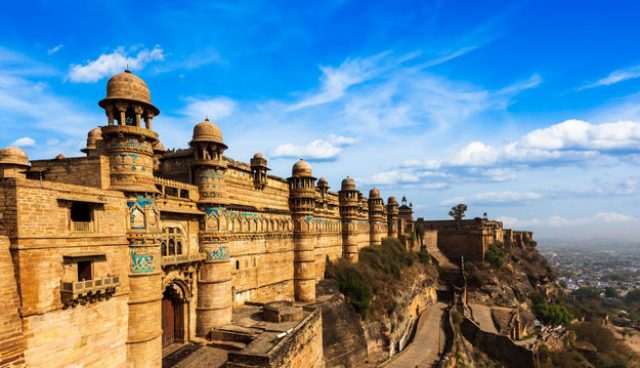
After breakfast, you will board train to Gwalior. Upon arrival you will proceed for sightseeing tour of Gwalior known for its spectacular hilltop citadel. Within walls lie Jain statues, Rajput Palaces, Hindu temples and a Victorian school. In the evening, you will be transferred to railway station to board the train to Agra. Upon arrival, you will be transferred to the Hotel. An overnight stay in Agra

Day 18Half day sightseeing of Agra and drive to Delhi for Departure

Early in the morning at sunrise visit the magnificient Taj Mahal – one of the seven wonder of the world surely the most extravagant expression of love ever created. 20,000 men laboured for over 17 years to build this memorial to Shah Jahan’s beloved wife. Also visit the Agra Fort – the rusty and majestic red- sandstone fort of Agra stands on the banks of the river Yamuna and the construction was started by Emperor Akbar in 1566. At the Diwan-I-Am (hall of public audience), a colonnaded hall of red-sandstone with a throne alcove of inlaid marble at the back, the Emperor heard public petitions. At the Diwan-I-Khas (hall of private audience) where marble pavilions with floral inlays lend an ethereal ambience, the Emperor sat on his gem-studded peacock Throne and met foreign ambassadors and rulers of friendly kingdoms. Afternoon, you will drive to Delhi. Upon arrival transfer to airport to board the flight back home.
https://www.thetajtours.com/tour/madhya-pradesh-enchanting-destination/

Tuesday, 17 April 2018

Celebrate India’s Rich Heritage on the World Heritage Day


Celebrate India’s Rich Heritage on the World Heritage Day
 World Heritage is the shared wealth of humankind. Protecting and preserving this valuable asset demands the collective efforts of the international community. This special day offers an opportunity to raise the public’s awareness about the diversity of cultural heritage and the efforts that are required to protect and conserve it, as well as draw attention to its vulnerability.
On 18 April 1982 on the occasion of a symposium organized by International Council for Monuments and Sites (ICOMOS) in Tunisia, the holding of the “International Day for Monuments and Sites” to be celebrated simultaneously throughout the world was suggested. This project was approved by the Executive Committee who provided practical suggestions to the National Committees on how to organize this day. The various methods implemented to achieve its mission are:-
 Visits to monuments and sites, and restoration works, possibly with free admission
  1. Articles in newspapers and magazines, as well as television and radio broadcasts
  2. Hanging banners in town squares or principal traffic arteries calling attention to the day and the preservation of cultural heritage
  3. Inviting local and foreign experts and personalities for conferences and interviews
  4. Organizing discussions in cultural-centers, city halls, and other public spaces
  5. Conducting Exhibitions
  6. Publication of books, post-cards, stamps, posters
  7. Awarding prizes to organizations or persons who have made an outstanding contribution for the conservation and promotion of cultural heritage or produced an excellent publication on the subject.
  8. Inaugurate a recently restored monument
  9. Special awareness raising activities amongst school children and youth
In India, there are altogether 36 World Heritage Sites. They are:-
      Cultural (28)
  1. The Taj Mahal (1983)
  2. Agra Fort (1983)
  3. Ajanta Caves (1983)
  4. Ellora Caves (1983)
  5. Sun Temple, Konârak (1984)
  6. Group of Monuments at Mahabalipuram (1984)
  7. Churches and Convents of Goa (1986)
  8. Fatehpur Sikri (1986)
  9. Khajuraho Group of Monuments (1986)
  10. Group of Monuments at Hampi (1986)
  11. Elephanta Caves (1987)
  12. Group of Monuments at Pattadakal (1987)
  13. Buddhist Monuments at Sanchi (1989)
  14. Humayun’s Tomb, Delhi (1993)
  15. Qutb Minar and its Monuments, Delhi (1993)
  16. Mahabodhi Temple Complex at Bodh Gaya (2002)
  17. Rock Shelters of Bhimbetka (2003)
  18. Great Living Chola Temples (1987, 2004)
  19. Champaner-Pavagadh Archaeological Park (2004)
  20. Chhatrapati Shivaji Terminus (formerly Victoria Terminus) (2004)
  21. Red Fort Complex (2007)
  22. Mountain Railways of India (1999, 2005, 2008)
  23. The Jantar Mantar, Jaipur (2010)
  24. Hill Forts of Rajasthan (2013)
  25. Rani-ki-Vav (the Queen’s Stepwell) at Patan, Gujarat (2014)
  26. Nalanda University at Nalanda (2016)
  27. The Architectural Work of Le Corbusier (2016)
  28. Historic City of Ahmadabad (2017)
Natural (7)
  1. Kaziranga National Park (1985)
  2. Keoladeo National Park (1985)
  3. Manas Wildlife Sanctuary (1985)
  4. Sundarbans National Park (1987)
  5. Nanda Devi and Valley of Flowers National Parks (1988, 2005)
  6. Western Ghats (2012)
  7. Great Himalayan National Park Conservation Area (2014)
Mixed (1)
  1. Khangchendzonga National Park (2016)
Sites on the Tentative List (42)
A Tentative List is an inventory of those properties which each State Party intends to consider for nomination. More about the Tentative List Process…
  1. Temples at Bishnupur, West Bengal (1998)
  2. Mattanchery Palace, Ernakulam, Kerala (1998)
  3. Group of Monuments at Mandu, Madhya Pradesh (1998)
  4. Ancient Buddhist Site, Sarnath, Varanasi, Uttar Pradesh (1998)
  5. Sri Harimandir Sahib, Amritsar, Punjab (2004)
  6. River Island of Majuli in midstream of Brahmaputra River in Assam (2004)
  7. Namdapha National Park (2006)
  8. Wild Ass Sanctuary, Little Rann of Kutch (2006)
  9. Neora Valley National Park (2009)
  10. Desert National Park (2009)
  11. Silk Road Sites in India (2010)
  12. Santiniketan (2010)
  13. The Qutb Shahi Monuments of Hyderabad Golconda Fort, Qutb Shahi Tombs, Charminar (2010)
  14. Mughal Gardens in Kashmir (2010)
  15. The Victorian & Art Deco Ensemble of Mumbai (2012)
  16. Delhi – A Heritage City (2012)
  17. Monuments and Forts of the Deccan Sultanate (2014)
  18. Cellular Jail, Andaman Islands (2014)
  19. The Glorious Kakatiya Temples and Gateways (2014)
  20. Iconic Saree Weaving Clusters of India (2014)
  21. Dholavira: A Harappan City (2014)
  22. Apatani Cultural Landscape (2014)
  23. Sri Ranganathaswamy Temple, Srirangam (2014)
  24. Monuments of Srirangapatna Island Town (2014)
  25. Chilika Lake (2014)
  26. Padmanabhapuram Palace (2014)
  27. Sacred Ensembles of the Hoysala (2014)
  28. Sites of Saytagrah, India’s non-violent freedom movement (2014)
  29. Thembang Fortified Village (2014)
  30. Narcondam Island (2014)
  31. Moidams – the Mound-Burial system of the Ahom Dynasty (2014)
  32. Ekamra Kshetra – The Temple City, Bhubaneswar (2014)
  33. The Neolithic Settlement of Burzahom (2014)
  34. Archaeological remains of a Harappa Port-Town, Lothal (2014)
  35. Mountain Railways of India (Extension) (2014)
  36. Chettinad, Village Clusters of the Tamil Merchants (2014)
  37. Bahá’í House of Worship at New Delhi (2014)
  38. Evolution of Temple Architecture – Aihole-Badami- Pattadakal (2015)
  39. Jaipur city, Rajasthan India (2015)
  40. Cold Desert Cultural Landscape of India (2015)
  41. Sites along the Uttarapath, Badshahi Sadak, Sadak-e-Azam, Grand Trunk Road (2015)
  42. Keibul Lamjao Conservation Area (2016)

https://www.thetajtours.com/celebrate-indias-rich-heritage-on-the-world-heritage-day/

Himachal Pradesh Tour Package


Itinerary

Day 1Arrival in Delhi

You will arrive at the Delhi International Airport. Delhi is India’s second largest metropolis next to Mumbai, which is located in the northern part of the country. The architectural features in the city are similar to those which can be seen in Athens, Rome and Istanbul. Transfer to hotel. An overnight stay in Delhi.

Day 2From Delhi to Chandigarh (250 km, 4-5 hours)

In the morning after breakfast, you will drive about 160 miles to Chandigarh – Dalhousie. Upon your arrival, you will be transferred to your hotel. From Dalhousie, one can have a great view of the valleys crossed by rivers Chenab, Ravi and Beas and snow-capped peaks of the Himalayas. Dalhousie was previously the recreation center of the British and now, many Tibetans have emigrated here. You will spend the night at Dalhousie. Then, after a good night’s rest at your hotel, you will take a 130-mile drive to Chandigarh, India’s famous architectural city designed by Swiss Architect le Corbusier – which is how Himachal Pradesh got the name the “Switzerland of India”. On the way, you will visit Rock Garden and other amazing sites. An overnight stay in Chandigarh.

Day 3From Chandigarh to Dalhousie (312 km, 5-6 hours)

The next stop on our Himachal Pradesh tour is a trip from Chandigarh to Dalhousie. After breakfast, you will go on a trip to Chamba, 28 miles away. On the way, you can visit the famous Khajjiar temples. Chamba is located at the foot of the Himalayas and it is a cultural center in northern India, an important temple of concern and tradition remaining alive today through paintings and bronze sculptures. You will spend the evening at Dalhousie. An overnight stay in Dalhousie.

Day 4An Excursion to Chamba and Khajjiar

One of the highlights of our Himachal Pradesh tour is a trip to Chamba and Khajjiar, where you will get to see the Khajjiar temples. After breakfast, go on 80-mile drive to Dharamshala. McLeod Ganj was the residence of the Dalai Lama, Tenzing Gyatso who fled Tibet during 1959. Dharamshala is also the seat of the exiled Tibetan government. On this day, you will get to visit the residence of the Dalai Lama, the Tibetan monastery, the museum and library. An overnight at the Dalhousie.

Day 5From Dalhousie to Dharamshala (120 km 2-3 hours)

After breakfast and check out from the hotel, you will drive to Dharamshala on the way you will get a chance to visit important spiritual spots like the residence of the Dalai Lama, as well as the Tibetan monastery, museum and library.
After reaching you will visit the Dal Lake which is spread in an area of 1 km and is bounded by rhododendrons, deodars, and junipers forest. Annually, a fair is held at the Kali Temple near the Lake. There is another temple close to the lake that is dedicated to sage Durvasa. Dal Lake is 2 km walk westwards from McLeodGanj bazaar.
Then, you will visit Triund, which is nestled in the foothills of Dhauladhar and is around 17 km from Dharamshala. It’s a trekking destination from McLeodGanj, and offers magnificent vistas of the mountains and valleys.
Naddi is the scenic picnic spot is located 5 km northwest of McLeodGanj. Naddi offers a spectacular view of the Kangra valley. You can trek to Kareri Lake, Triund, and Guna Devi from here. It’s also becoming a popular destination for nature lovers.
Masrur or Masroor is the major attraction of this place is the fifteen exquisitely carved monolithic rock temples dating back to 8th century. The carvings of these temples are similar to Kailash temple at Ellora. In the sanctum of the main temple, one can find images of Lord Ram, and the Goddesses Sita and Lakshmi. An overnight stay in Dharamshala.

Day 6Drive to Manali (269 km, 5-6 hours)

After breakfast, you will drive to Manali. Upon arrival you will start the sightseeing of Manali. Firstly, you will visit Solang Valley (14 km) drives its name from combination of words Solang (Nearby village) and Nullah (water streams from mountains). It is a side valley at the top of the Kullu Valley in Himachal Pradesh, India 14 km northwest of the resort town Manali on the way to Rohtang Pass, and is known for its summer and winter sport conditions. The sport which is most commonly offered is parachuting, paragliding, skating and zorbing.
Rohtang Pass (51 km): On the road to Keylong is the Nehru Kund (6km) which is a clear water spring named after the Late Pt. Jawaharlal Nehru. Kothi (12km) is a picturesque village and has a view of the deep gorge through which the Beas swiftly races. The Rahalla falls (16km) are at altitude of 2500m. A crucial link on the old trade route and still the gateway to Trans Himalayan Lahaul, the Rohtang Pass is at height of 3978 m. The pass is 52 km from Manali town. On the way to Rohtang Pass, lies a popular picnic spot known as Rani Nala, which is 40 km from Manali town.
Then you will visit the Club House with its comprehensive facilities that include a roller skating rink, an auditorium, billiards rooms, a library, a bar and restaurant. Bungee jumping is also provided. An overnight stay in Manali.

Day 7Drive to Shimla (249 km, 5-6 hours)

Today, after breakfast you will drive to Shimla thereafter you will do the sightseeing of Shimla. You will visit, the Christ Church which is the second oldest church in Northern India. It has a very majestic appearance and inside there are stained glass windows which represent faith, hope, charity, fortitude, patience and humility. Then, the Mall is the main shopping street of Shimla. It also has many restaurants, clubs, banks, bars, Post Offices and tourist offices. The Gaiety Theatre is also situated there. People walk up and down The Mall slowly, stopping to gossip, as it is the main meeting place for everyone. The Ridge and Scandal Point are the two main meeting points at The Mall. The Mall is dotted with many eating places. An overnight stay in Shimla.

Day 8Drive to Delhi (369 km, 6-7 hours)

Today, after breakfast you will drive back to Delhi. Upon arrival you will be transferred to the airport for your onward journey.


https://www.thetajtours.com/tour/himachal-pradesh-tour-package/

Thursday, 12 April 2018

Devastating thunderstorm damaged some parts of Taj Mahal


Devastating thunderstorm damaged some parts of Taj Mahal
A devastating storm of 135 km per hour damaged the pillars of the royal and southern gates of the Taj Mahal.
A north-west pillar on top of the royal gate and a flower vase in stone and a brass filial were brought down in the thunderstorm, said conservation assistant of the Archaeological Survey of India at Taj Mahal.
Similar, at the southern gate too, a portion of the wall of Rewti Ka Bada got damaged when a tree fell on it. A red sand stone flower vase at Sahindi Begum Makbara also broke and fell.
The good news is that no damage has been assessed on the main monument made of white marble and no tourists were injured at the Taj Mahal.
The city too faced similar consequences as many trees and electricity poles were uprooted.
Tomorrow, 363rd annual ‘Urs’ or death anniversary of Mughal emperor Shah Jahan, who built the Taj Mahal to immortalize his love for his queen Mumtaz Mahal, will be observed at Taj Mahal in Agra from 13th April to 15th April 2018.
The original graves of the royal couple, located deep down in the monument, will be thrown open for public viewing and entry to the monument shall be free for all. It is only during the annual Urs that tourists can get to see the original graves. For the rest of the year, the replicas of the graves are open for public viewing. On April 13 and 14, tourists’ entry will be free from 2 pm onwards and on the last day of the Urs, April 15, entry will be free from morning till evening.
The Taj Mahal was designated as a UNESCO World Heritage Site in 1983. It is one of the Seven Wonders of the World which is considered as the most photogenic destinations of India. It is one of the most exquisite structures ever built by any emperor. It was constructed by the fifth Mughal emperor Shah Jahan in the fond memory of his favorite wife Mumtaj Mahal. The Taj Mahal in terms of architecture, is one of the most symmetrical structures in the world, constructed using pure white marble and adorned with precious and semi precious stones. The construction started in 1631 and got completed in 1653 AD; 20,000 workers worked day and night together for 22 years.

Thursday, 5 April 2018

Shah Jahan’s annual Urs will be observed in April


Shah Jahan’s annual Urs will be observed in April  
The 363rd annual ‘Urs’ or death anniversary of Mughal emperor Shah Jahan, who built the Taj Mahal to immortalize his love for his queen Mumtaz Mahal, will be observed at Taj Mahal in Agra from 13th April to 15th April 2018.
The original graves of the royal couple, located deep down in the monument, will be thrown open for public viewing and entry to the monument shall be free for all. It is only during the annual Urs that tourists can get to see the original graves. For the rest of the year, the replicas of the graves are open for public viewing. On April 13 and 14, tourists’ entry will be free from 2 pm onward and on the last day of the Urs, April 15, entry will be free from morning till evening.
It ritual will commence from April 13 with the washing of the graves of the emperor and queen Mumtaz Mahal. Then ‘gusl ki rasm’ (bathing of the graves), followed by ‘sandal ki rasm’ (sandal ceremony), ‘gul ki rasam’( flower ceremony) ‘chadar poshi’ (ceremonial laying of chadar)  and later a qawwali program. Later, a special several meters long ‘chadar’ in seven colors will be offered.
At a preparatory meeting with the administration and the police, the Central Industrial Security Force (CISF) explained the security concerns and asked the organizers to follow the established norms and procedures.
The Taj Mahal was designated as a UNESCO World Heritage Site in 1983. It is one of the Seven Wonders of the World which is considered as the most photogenic destinations of India. It is one of the most exquisite structures ever built by any emperor. It was constructed by the fifth Mughal emperor in the fond memory of his favorite wife Mumtaj Mahal. The Taj Mahal in terms of architecture, is one of the most symmetrical structures in the world, constructed using pure white marble and adorned with precious and semi precious stones. The construction started in 1631 and got completed in 1653 AD; 20,000 workers worked day and night together for 22 years.
https://www.thetajtours.com/shah-jahans-annual-urs-will-be-observed-in-april/

Sunday, 1 April 2018

Taj Mahal entrance ticket valid only for three hours


Taj Mahal entrance ticket valid only for three hours
After restricting the number of visitors per day now the Archaeological Survey of India has decided that the entry ticket to the world heritage monument would be valid for only three hours. The move was necessitated by the surge in the number of visitors.
During peak tourist season, long weekends and festive holidays, the number of tourists visiting the Taj Mahal crosses 60,000 to 70,000. This could prove fatal for the foundations of the monument, said the officials of Archaeological Survey of India. “We’ve had situations where over 50,000 visitors come to Taj Mahal in a single day. The monument space is limited and we cannot extend that. We have to make do with the available area and manage visitors within that limited space. Sometimes it gets very difficult to manage the crowd. There are some visitors who come in early and do not leave till closing time and that create additional stress,” said an Archaeological Survey of India official, adding that limited-validity tickets are expected to sort it out.
In another new beginning, zero-value tickets were introduced for children below 15 years of age at Taj Mahal from Sunday. According to figures given by ASI, a total 5,197 children visited the monument on Sunday. Of these, 4920 were Indians, 256 foreigners and 21 were from SAARC countries. The total number of visitors at Taj Mahal on Sunday was 38,012.
“At present, there is no time restriction for tourists visiting the Taj Mahal but things will change from April 1. The ticket issued from the monument would mention the time and tourists would be required to stay on the Taj premises only for three hours from the time mentioned. These three hours would not overlap with the closing time and the monument would be closed at the scheduled time,” said Mr. Bhuwan Vikram Singh, Superintending Archaeologist for the Archaeological Survey of India, Agra.
Those visitors booking tickets online for the Taj Mahal would be required to specify the time slot of three hours and would be required to visit the monument only during this period. Visitors exceeding this time limit would be required to pay extra.
The Taj Mahal was designated as a UNESCO World Heritage Site in 1983. It is one of the Seven Wonders of the World which is considered as the most photogenic destinations of India. It is one of the most exquisite structures ever built by any emperor. It was constructed by the fifth Mughal emperor Shah Jahan in the fond memory of his favorite wife Mumtaj Mahal. The Taj Mahal in terms of architecture, is one of the most symmetrical structures in the world, constructed using pure white marble and adorned with precious and semi precious stones. The construction started in 1631 and got completed in 1653 AD; 20,000 workers worked day and night together for 22 years.

https://www.thetajtours.com/taj-mahal-entrance-ticket-valid-only-for-three-hours/